
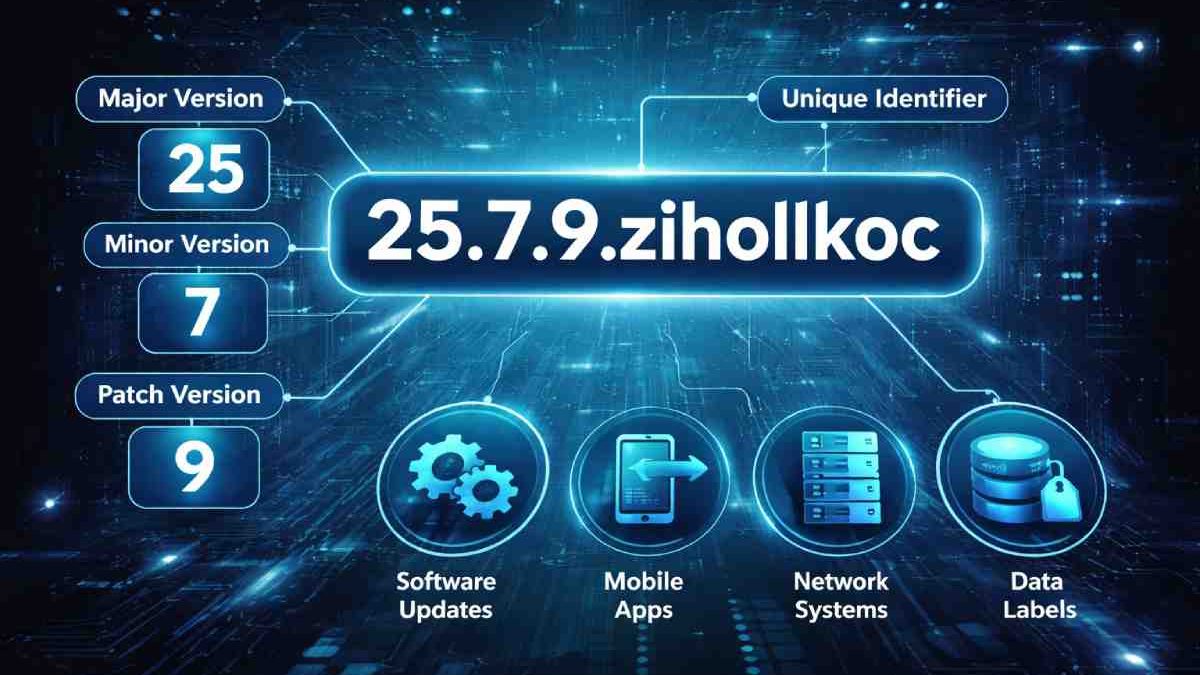

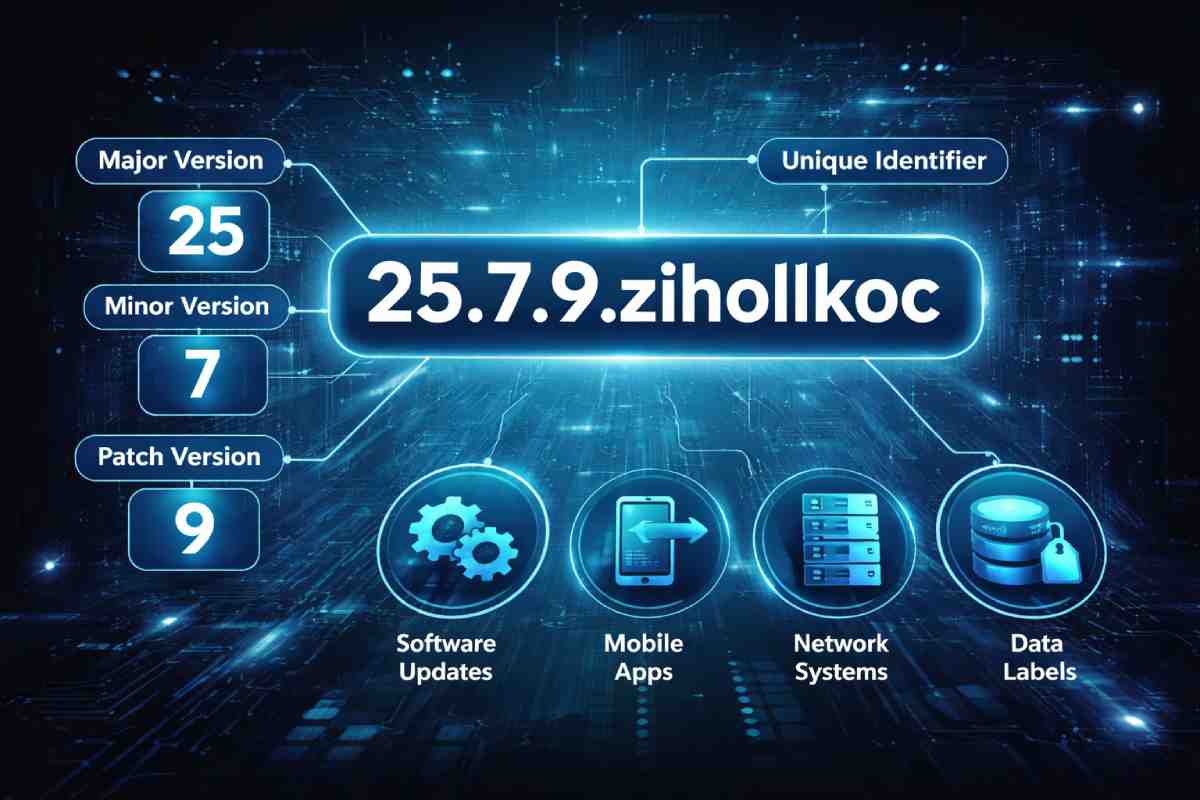
When encountering a string like “25.7.9.zihollkoc,” it’s useful to analyze its structure:
-
25.7.9 — This looks like a software version number. Many software products and digital services use version numbers in similar formats to communicate major, minor, and patch levels (e.g., version 25.7.9).
-
zihollkoc — This portion does not match any recognized product name or acronym based on a web search. It may be a unique identifier, internal code, or placeholder text.
Since there is no direct public reference for the full string, this article will focus on the meaning of version number structures like “25.7.9” in technology and how similar nomenclature is used in software releases. Then we’ll explore examples of apps or systems that actually have versions numbered 25.7.9.
Table of Contents
1. What a Version Number Like “25.7.9” Tells Us
Software and digital products typically use semantic versioning (SemVer) or similar schemes to describe releases:
Semantic Versioning (SemVer)
Semantic Versioning consists of three parts:
-
Major version (25) – significant changes, possible breaking updates.
-
Minor version (7) – added features but backward compatible.
-
Patch version (9) – bug fixes and minor improvements.
So, 25.7.9 in a versioning context might mean:
-
Major update 25
-
Minor update 7 under that major
-
Patch or bug fix iteration 9
This hierarchical structure helps developers and users track the maturity and compatibility of software. For example, a jump from 25.7.8 to 25.7.9 indicates small refinements rather than dramatic changes.
This interpretation is backed by real-world software release formats. While “25.7.9.zihollkoc” itself isn’t directly documented, the pattern of versioning clearly exists in technology products. Below are real examples where 25.7.9 appears as an actual version.
2. Real Examples Featuring Version “25.7.9”
Although “zihollkoc” did not return meaningful search results, “25.7.9” does appear in several software and APK listings.
A. OPNsense Version 25.7.9
OPNsense is a firewall and routing distribution based on FreeBSD widely used in network security. A release with version 25.7.9 is documented:
-
This version addressed bugs and improved system behavior.
-
The release included fixes related to DNS caching, plugin updates, UI improvements, and more.
OPNsense is a good example of how mid-level versions like “25.7.9” signal ongoing refinement and maintenance by developers rather than major functional changes.
Why this matters:
Network administrators need clarity on version changes because even small patches can fix security issues or compatibility problems.
B. Android Apps with Version “25.7.9”
1Channel is an Android application that also uses versioning like 25.7.9:
-
The app is updated periodically, with 25.7.9 reflecting a recent build in late 2025.
-
Such versioning is typical for mobile apps where developers maintain ongoing feature tweaks and bug corrections across releases.
Apps that use this style of versioning make it clear which build users have installed and whether they should update to fix issues.
C. JoyPlan : House Design 3D
Another APK listing shows JoyPlan : House Design 3D having a version formatted similarly (not identical but close):
-
It’s referred to as “Joyplan … 25.7.9” on an APK site.
-
This naming emphasizes how developers can assign version numbers with similar structures.
3. Version Number Formats Across Industries
Although we’ve focused on software, version numbering is used in many fields:
Software & Operating Systems
-
Most major operating systems (Linux distributions, networking systems, firewall appliances, browsers, etc.) use structured version numbers.
-
These assist both developers and end users in identifying the exact set of features and fixes included.
Documents, Laws & Specifications
Sometimes documents or standards are numbered with periods that look like software versioning, e.g., Section 25.7.9 in a legal or engineering context. However, this is a reference to document structure, not a version.
For example:
-
Some bylaws or construction documents use sections like 25.7.9 to break down detailed clauses or requirements.
Data or Experimental Labels
In data analytics or machine learning workflows, a tag like zihollkoc might represent a dataset or experiment ID. This is common in research pipelines where versioning and identifiers are combined.
4. What “zihollkoc” Could Represent
Although there is no public information on “zihollkoc,” here are possibilities based on common usage patterns:
A. Unique Identifier (UID)
-
Many systems generate alphanumeric IDs like “zihollkoc” for data entities, session keys, or internal references.
-
These do not necessarily reflect public artifacts but may be used in logs, databases, or code branches.
B. Placeholder or Obfuscated Label
-
Developers sometimes use random strings during development or testing.
-
These placeholders can later be replaced with human-readable names but appear in intermediate metadata or dumps.
C. Brand or Project Code Name
-
It may be an internal code name for a software build or hardware variant.
-
Especially in large projects, cryptic names coexist with structured version numbers.
5. Versioning Best Practices (Learning from “25.7.9”)
If you are working with software, apps, or APIs and encounter version strings like 25.7.9, here are best practices to keep in mind:
Use Semantic Versioning Clearly
-
Separate major, minor, and patch segments with periods.
-
Use incremental versioning for traceable updates.
Avoid Ambiguous Suffixes
-
In large codebases, add clear identifiers (e.g., build metadata or pre-release tags) after standard versioning if needed.
-
Random strings like “zihollkoc” are fine internally but should be documented for external users.
Communicate Changes with Release Notes
-
Always accompany version numbers with readable change logs so users understand what updates include.
Conclusion
The keyword “25.7.9.zihollkoc” may not correspond directly to a popular public product or entity, but by breaking it down we learn:
-
25.7.9 — is a legitimate version number format found in real software like OPNsense (firewall distribution) and Android apps (e.g., 1Channel).
-
zihollkoc likely represents a unique identifier, placeholder, or internal code rather than a known commercial name.
-
Structured version numbers are vital in software development to track changes, fixes, and compatibility.
Understanding these practices helps demystify seemingly cryptic strings and reveals a larger context of how technology products communicate updates.
Also Read: Samsung Galaxy S10: Description, Information, and More